Live
TempoForge
Adaptive AI running coach. A deterministic engine builds and adapts the plan; a grounded LLM coach explains it and proposes validated changes.
Python / FastAPI / Flutter / PostgreSQL / AWS CDK / Kimi K2.5 on Bedrock
Visit site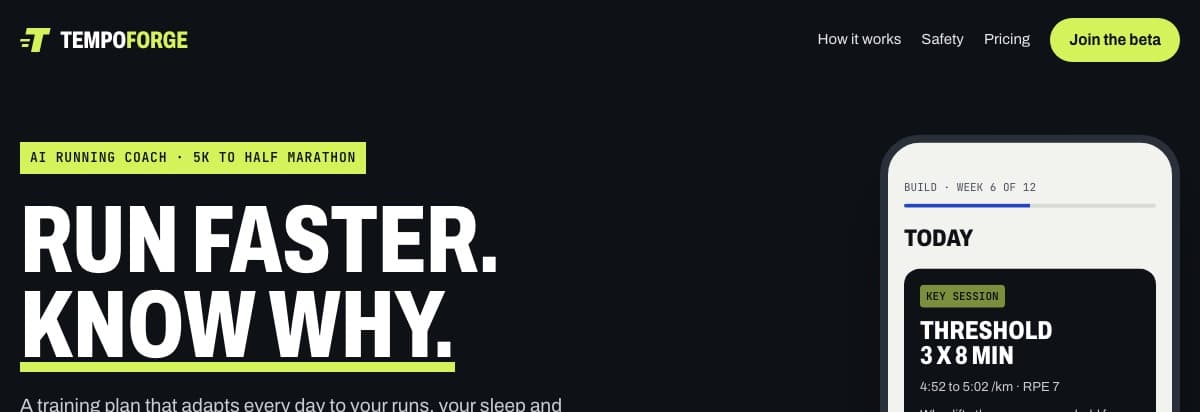
How the engine and the model split the work
TempoForge is an adaptive running coach for 5K to half-marathon runners, built on one rule: the LLM proposes, the engine decides. A pure training engine with no database or web imports builds every plan from Daniels VDOT paces and periodised phases, with capped weekly growth, a deload every fourth week, a taper and checkpoint time trials. Each workout carries reason codes, which the "why this workout" card and the coach both explain rather than invent.
What happens when the plan has to change
User edits, coach proposals, missed workouts, illness, travel and pain reports all go through one function that logs each change with its before-and-after diff and reason codes. A change that adds a guardrail violation, such as a key session moved to the day after another or a week that grows faster than the runner's experience allows, is stored as rejected with its reasons.
Skips, easier sessions and missed workouts are never rejected, and pain and illness changes apply even when a guardrail objects, because they only remove load; later weeks are then eased back in to avoid a volume spike. Accepting a coach proposal re-runs it against the current plan, so a stale proposal cannot slip through.
How the coach stays grounded
The coach runs a tool loop on Amazon Bedrock, and the one tool that can change the plan only stages a proposal for the runner to accept in the app. Every pace in a reply must match the coach's context or tool results within 3 seconds per kilometre, or the model gets one corrective retry, then a fixed fallback reply.
Red-flag symptoms are screened by rules before any model call: chest pain, fainting or palpitations get fixed emergency copy and pause the plan until the runner confirms a doctor has cleared them.
Which model runs it and how it ships
Production runs Kimi K2.5 through Bedrock's Converse API, the fastest of the models whose answers stuck to the engine's data in a comparison run on the coach loop itself; Claude is a configuration switch away. A Flutter client for iOS, Android and web talks to FastAPI and Postgres, and AWS CDK deploys the API on ECS Fargate with RDS Postgres from CI on every backend change.